Decoding your relationship with money
The beliefs behind why you earn, spend and save the way you do, and how to start changing them.
In 2026, there's no shortage of money gurus scattered across the internet. They tell us how to save, how to invest, and what we should and shouldn't be spending our money on. They may even share personal anecdotes of building 7-figure businesses in under 10 months, often promising that we can achieve the same if we simply follow their 12-step process.
And perhaps they're right. Maybe following their advice really could help you reach your financial goals. But what they don't always tell you is that money is not nearly as rational as we might think.
The way we earn, spend, save – and ultimately, the financial futures we build for ourselves – isn't determined by numbers alone. Our experiences, beliefs and emotions all play a part, influencing our financial decisions in ways we don't always recognise.
As Morgan Housel, author of The Psychology of Money, puts it:
“A genius who loses control of their emotions can be a financial disaster. The opposite is also true. Ordinary folks with no financial education can be wealthy if they have a handful of behavioral skills that have nothing to do with formal measures of intelligence.”
In essence, he is describing something deeply personal: our relationship with money.
Think about how you feel when you receive an unexpected payment. Do you feel relieved, excited, or immediately think about what you could buy? And when an unexpected expense comes along, do you approach it calmly or find yourself worrying about what it means for your finances?
These reactions don't happen in isolation. Many of them can be traced back to the experiences and attitudes we develop much earlier in life.
Where it all begins
Growing up, we observe how the people around us talk about money, manage household expenses and respond to financial pressures.
These early experiences can shape what financial psychologist Dr Bradley Klontz calls our money scripts: often unconscious beliefs about money that develop during childhood, can be passed down through generations and influence our financial behaviour as adults.
Perhaps you grew up in a household where money was tight, making financial security particularly important to you. Maybe money was rarely discussed, leaving you to figure things out for yourself. Or perhaps you associated spending with enjoyment and generosity because that's what you saw growing up.
Over time, these experiences can become deeply ingrained beliefs. They may influence how comfortable you feel spending on yourself, how much you prioritise saving or even how you approach opportunities to earn more.
The emotions behind your decisions
Money can represent different things to different people. For some, it means security and stability. For others, it represents freedom, independence or a sense of achievement.
These associations can shape everyday financial behaviour. You might find yourself spending more when you're stressed or using shopping as a way to reward yourself after a difficult week. Equally, you might avoid checking your bank balance because you're anxious about what you'll find, or feel guilty whenever you spend money on something that's not essential.
None of these behaviours necessarily tells the whole story, but recognising them can help you understand what's influencing your decisions.
Getting to know your money habits
Understanding your relationship with money starts with paying attention to your own feelings and behaviour, without immediately judging it.
Think about the financial decisions you make regularly. What makes you feel confident about spending? What causes you to hesitate? Do you save because it gives you peace of mind, or because spending makes you uncomfortable?
There are no universally right or wrong answers. The aim is to recognise the beliefs and emotions shaping your financial choices, so you can decide which habits are working for you and which might be worth reconsidering.
When it comes to money, understanding why you do what you do is just as important as knowing what to do with it.
Awareness is the first step towards change
Once you're aware of your money habits, you can actively start changing them. The key is to challenge the beliefs driving those behaviours and practise responding differently.
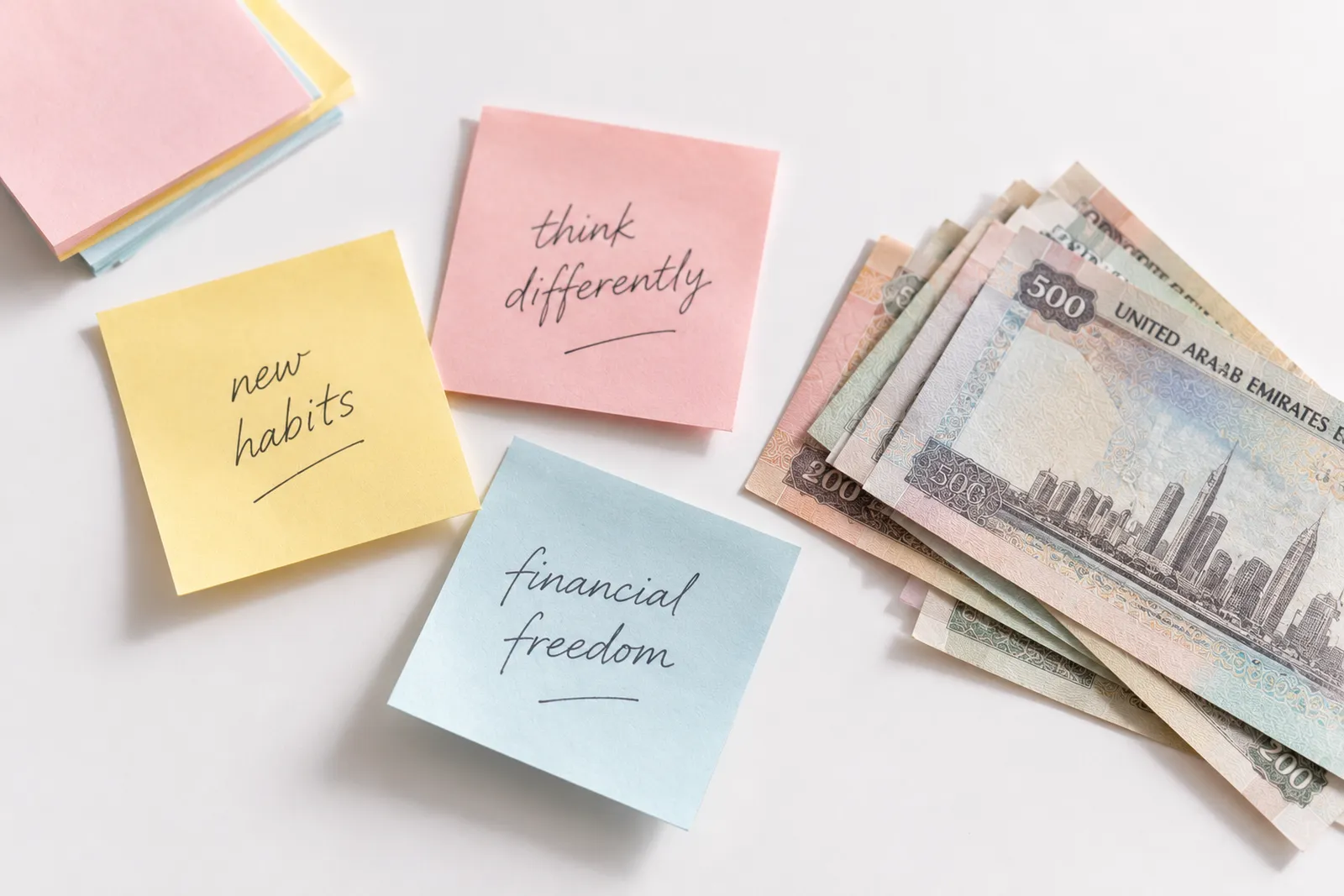
Dr Bradley Klontz suggests writing down recurring thoughts about money, an approach known as a Money Script Log, to help bring unconscious beliefs into focus. Once you've identified one, ask yourself whether it's entirely true, where it came from and whether it's still serving you.
For example, if you believe you'll never have enough money, consider replacing that assumption with a more constructive one: that there are steps you can take to build greater financial security. If you see saving as having to give something up, try thinking of it as a way to create more choices in the future. Klontz also explores the use of a Healthy Money Mantra, a positive belief that you can repeat and reinforce through your actions.
Then put that new way of thinking into practice through small, consistent actions. Set aside a manageable amount each month, pause before making purchases driven by emotion or give yourself permission to spend on something you value without feeling guilty.
Changing long-held money habits takes time, but each small decision can help reinforce a different way of thinking and behaving.

Anna K
Financial Education Writer
Anna writes NOW's guides on budgeting, saving, retirement and investing basics. She turns complex money topics into clear, practical steps, and every guide she writes is checked for accuracy before it's published. Her articles are for education only and are not personal financial advice.

Reviewed by Emma R, Head of Content & Financial Education
For education only. Not personal financial advice. This article explains how things work; it does not recommend what you should do.